
A Note of Gratitude and Transition
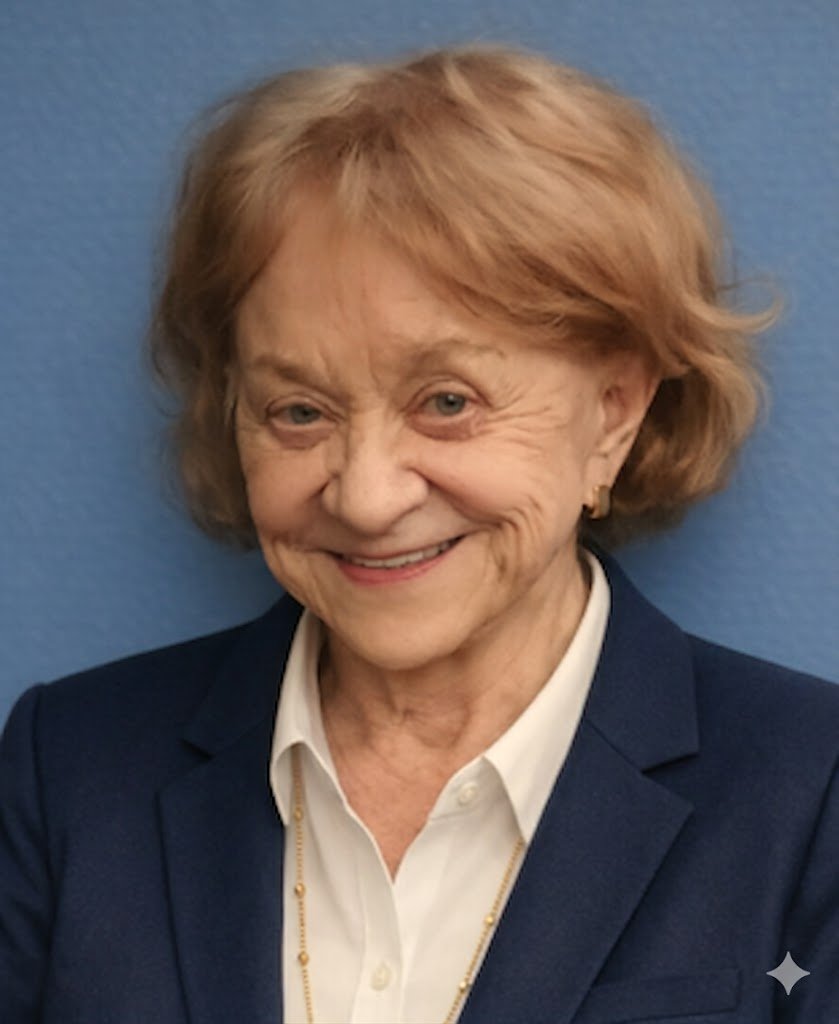
As I have decided to step aside from my position as president of the German Language School Conference, I would like to take a moment to express my sincerest gratitude to all the colleagues and friends who have worked alongside me over the years.
Although I am retiring from my role as president, I remain deeply committed to the vision and the mission of the GLSC.
As past president and co-founder of the GLSC, I will continue as an elected GLSC Board Member to contribute by advising the GLSC Board.
I will remain active on several committees and professional boards, continuing work that benefits the GLSC.
Finally, I look forward to having more time to devote to publishing.
I am very pleased to introduce the next President of GLSC, Dr. Stefanie Mischner.
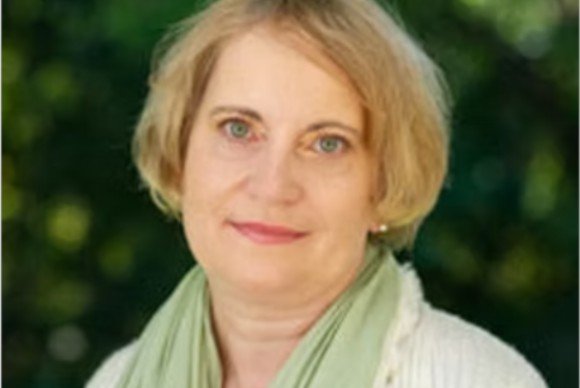
For more than 25 years, she has been actively involved in community-based German language schools, serving as a teacher, Assistant Principal, and Principal of the German School of Connecticut, and later of the German Language School at GISNY.
She has also been involved with the GLSC for more than 20 years as a freelancer, collecting and evaluating important data and representing German language schools at the Bundestag in Berlin.
Since 2022, she has been a valued member of the GLSC Board of Trustees.
Dr. Mischner holds B.A. degrees in teaching German, English as a Foreign Language, and Art Education from Otto-Friedrich University. She also earned an Ed.M. from Teachers College, as well as a Ph.D. in Economics and Education from Columbia University.
I look forward to working with our new President and to the next 50 years, as we continue to support and celebrate our language and culture within the diaspora in the United States.
With heartfelt thanks,
RL
Looking Back:
Highlights of the German Language School Conference
by Dr. Renate Ludanyi
It is remarkable how much has grown from a modest beginning.
In 1977, a small group of schools in and around New York, encouraged and supported by the German Consulate General in New York, came together to collaborate.
They formed a steering committee and on September 6, 1978 [1] incorporated in the state of New Jersey as the German Language School Conference (GLSC). The name was modeled on the German Kultusministerkonferenz, reflecting the idea of a standing conference of Saturday Schools working in partnership to support community-based German education to fill needs that public education could not address.
During this formative period, I was in contact with Joshua Fishman, the eminent sociolinguist and professor at Ferkauf Graduate School. He strongly encouraged this fledgling organization and generously shared with me contact lists of Saturday Schools across the country. With great enthusiasm, we began reaching out, by phone and letter, and soon brought together a nationwide and broad network of Saturday Schools under the GLSC umbrella.
In 1980, GLSC conducted the first GLSC School Development Conference taking place at NYU’s Deutsches Haus. Later the conference moved to the Goethe Institute, the Liederkranz, and the Kolping House in New York. As it outgrew all these locations, it was conducted at the German Consulate General in New York starting in 2000, and in 2023 moved to the Global School of Brooklyn.
In 2026, the annual GLSC Conference will be conducted at the German School of Silicon Valley in California to foster relations with GLSC member schools across the United States.
In 1981, with the support of Wolfgang Schmidt of the Central Agency for German Schools Abroad (Zentralstelle für das Auslandsschulwesen – ZfA), the Deutsche Sprachdiplom (DSD) was introduced to the United States. The first school to offer this exam was the German School of Connecticut, and soon thereafter, German Saturday Schools in New York and New Jersey.
The GLSC also actively promoted the AATG National German Exams at a time when many schools were not yet participating and helped establish the Delta Epsilon Phi German Honor Society within Saturday Schools.
Between 1990 and 1992, [2]representatives of the GLSC visited the Saturday Schools in the San Francisco area and organized the first annual conferences for these institutions.
During these visits, GLSC speakers introduced the Deutsches Sprachdiplom (DSD) as well as the GLSC publication Jump into German, a K–4 curriculum and instructional resource co-developed in collaboration with the Fachberater of the ZfA and distributed through the AATG.
In 2006, GLSC created the first comprehensive demographic survey of Saturday school students and their parents to raise awareness of community-based heritage language schools in the United States and to highlight their need for ongoing support from Germany.
Throughout the years, the GLSC and the Fachberatung of the ZfA collaborated closely, coordinating their development conferences in New York and Washington, D.C.
Between 2000 and 2006, language education experts from both the West and East Coasts worked jointly with the Fachberatung to develop the so-called Zentrale Deutschprüfung Level 8. This standardized German language examination was designed for language schools in the United States to address the need for structured exam preparation and to support students progressing toward the Deutsches Sprachdiplom I.
Recognizing the growing importance of the Weltverband des Auslandsschulwesens (WDA) as an advocacy voice for the international German Schools, the GLSC joined the organization in 2004, one year after the founding of the WDA. In 2013, through political advocacy and in cooperation with the WDA, the GLSC contributed to the inclusion of the DSD in the Auslandsschulgesetz, helping secure official support and funding for DSD programs in Saturday schools across the U.S.
GLSC is particularly proud to have strengthened its collaboration with Stiftung Verbundenheit by becoming a partner organization. In 2025, GLSC was honored to receive the Kulturförderpreis der Stiftung Verbundenheit. The foundation recognized ”the extraordinary work of the GLSC, which for decades has made an indispensable contribution to German-language education and community engagement in the United States.”
GLSC members have presented at numerous professional conferences, both nationally and internationally, and have contributed a range of publications, including book chapters and articles in professional journals. See Home – German Language School Conference
Through initiatives such as Sprachklub International and the Vorlesewettbewerb, which provide young learners with opportunities to engage with international public figures and to develop a passion for reading in German, as well as through year-round webinars and teacher cafés, the GLSC continues to strengthen its programming. With the return of the Annual GLSC Conference to California after a 33-year interval, GLSC looks to the future as a strong advocate for the German language in the United States.
[1] Deutsche Sprachschule of Central New Jersey; German Language School Medord, NJ; German Cultural Soceity of Westwood, NJ; Deutsche Sprachschule, NY; German Language School, Morris Count, NJ; German Educational Society, North Bergen, NJ; Deutsche Sprachschule Union, NJ; German Language School of Connecticut, CT[2] These conferences were organized in cooperation with Roswitha Ingram, Saturday School Freemont at the Holiday Inn, Union City, on Sept. 23, 1990, sept. 21, 1991, Sept. 27, 1992.